
bit Generations: Nintendo's Most Abstract Experiments, Still Unmatched 20 Years Later
Subtitle: Seven GBA games that felt like prototypes for a future Nintendo never quite built.
I remember the first time I saw a bit Generations game running. It was 2006, and I was deep in a GameFAQs forum rabbit hole, hunting for import recommendations. Someone had posted a grainy video of Boundish, the one where you roll a ball through a maze by tilting the GBA itself. The tilt sensor was the hook, but the look was what stopped me. No Mario. No Zelda. Just shapes. Colors. Motion. It looked like someone had stripped a game down to its skeleton and said, "Okay, now what's the purest thing this skeleton can do?"
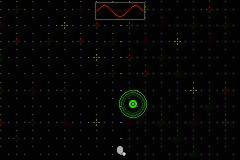
Twenty years later, Nintendo published seven of these experiments in Japan under the bit Generations banner, and they still feel like they arrived from a different timeline. Developed mostly by Skip Ltd., the studio behind Chibi-Robo!, these games weren't just minimal in art style—they were minimal in concept. Dotstream is a racing game where you pilot a glowing line through a neon tube. Orbital is a gravity-puzzler where you sling a planet around a star. Dialhex is a puzzle game where you rotate segments of a circle to match colors. None of them explain themselves. You just start, fail, learn, and eventually understand.
That's the bit Generations design philosophy in a nutshell: trust the player to figure it out. No tutorials. No handholding. Just a system, a goal, and your own curiosity. It's the same trust that Demon's Souls would demand three years later, albeit in a much more hostile package. And it's the same trust that the best indie games still lean on today. Fez, Thomas Was Alone, Baba Is You—they all owe something to this lineage of "here's a rule, figure out the exceptions."
Here's the connection nobody's drawing: bit Generations is the spiritual ancestor of modern minimalist puzzle games, but it's also the missing link between the Game & Watch era and the Nintendo Labo experiments. The tilt sensor in Boundish is a direct ancestor of the motion controls in the Wii, which launched just months after these games. And the abstract, toy-like philosophy—games as objects to be played with, not stories to be consumed—echoes through 1-2-Switch, Nintendo Labo, and even Ring Fit Adventure. Nintendo has always made toys. bit Generations was just the most honest version of that.
Who is this for? Honestly, it's for anyone who's ever looked at a game and thought, "I wish this was weirder." It's for the person who played Katamari Damacy and wanted something even more stripped down. It's for the collector who knows that some of the best game design happens in the margins, where budgets are small and constraints are tight. These games are not for everyone. They're not even for most people. But for the people they're for—the ones who see a ball rolling through a maze and feel a pull—they're essential.
Are they still worth playing today? Emulation makes them accessible, but the experience is incomplete without the original hardware. The tilt sensor in Boundish is finicky on a keyboard. The tiny screen of the GBA was part of the aesthetic—these games were designed to be held, not watched. Still, the ideas hold up. Orbital is a better physics puzzle than most things on Steam. Coloris is a falling-block game that feels like Tetris filtered through a dream. They're not broken. They're just waiting.
bit Generations didn't change the industry. They didn't spawn sequels or inspire a genre. But they sit there in Nintendo's catalog like a secret handshake—a reminder that the company that gave us Mario and Zelda also gave us a game where you steer a dot through a tunnel for no reason other than that it feels good. Twenty years on, that still plays like little else.

"bit Generations is Nintendo's quietest masterpiece—a collection of abstract toys that trusted players to find their own fun, and still feels ahead of its time two decades later."
— TED