Final Fantasy Remakes: Trilogy Is Just the Warm-Up
Square Enix already gave us three parts for one game. For others, that might not be enough.
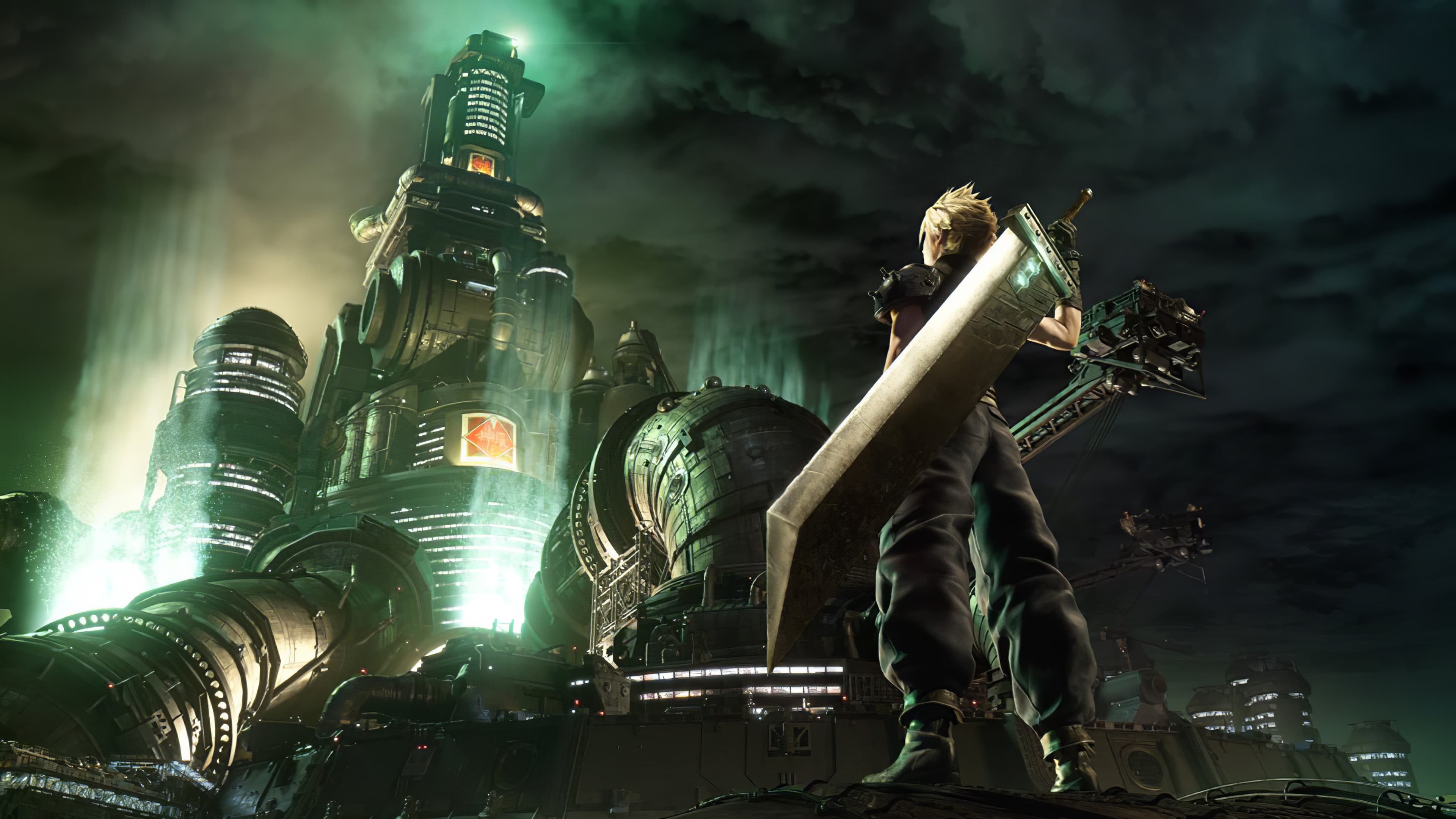
Final Fantasy VII Remake's trilogy wraps next year. Yoshi-P told a fan in Berlin that other entries in the series would probably need even more chapters if they got the same treatment. And the more I sit with that, the more I think he's not being dramatic—he's being honest.
Let's start with Final Fantasy VII itself. That game was already a unicorn. It had a universal casting of characters, a single overarching plot with clear act breaks (Midgar, the open world, the final dungeon), and a design that lent itself to expansion. You could stretch Midgar into a full game because it was already dense. You could turn the second part into a road movie because that's what the original felt like anyway. Square Enix got lucky—VII's structure was flexible enough to survive being inflated into three 30-hour blobs.
Now try that with Final Fantasy VI. That game has fourteen playable characters, each with their own miniature arc that weaves in and out of a story that explodes halfway through into a literal world reset. The World of Ruin isn't a chapter—it's a whole second game's worth of content. How do you split that? You'd need a part just for recruiting everyone. Part 2 for the branching scenarios. Part 3 for the final Kefka confrontation. And that's before you touch the opera scene, which alone would take a modern team three years to realize in Unreal Engine with proper mocapped singing.
Or Final Fantasy X. Linear, sure, but the Sphere Grid is its own nightmare. The game systems in X are so tightly coupled to the narrative—Tidus's journey as a distorted memory, the spiral of death in Spira—that any expansion would risk breaking the emotional timing. Could you stretch Seymour's castle into a full game? Maybe. But you'd have to invent whole new arcs for Auron, Rikku, and Kimahri, arcs that weren't in the original because the devs trusted you to fill in the gaps. Modern remake culture doesn't trust you to fill in gaps.
Here's the unexpected connection: this reminds me of how J.R.R. Tolkien's Lord of the Rings was originally conceived as a single novel. The publisher split it into three because of post-war paper shortages. That forced split ended up defining how we think about epic fantasy structure. Square Enix might be in the same situation—they're not choosing a trilogy because it's artistically optimal; they're choosing it because they physically cannot produce a single game that does everything Final Fantasy VI or IX wants to do without it becoming a ten-year development cycle.
And I think that's why Yoshi-P's answer lands the way it does. It's not a threat. It's a confession. Remaking a classic Final Fantasy isn't just expensive—it's fundamentally incompatible with the way modern AAA games are built. You'd need to either cut content (which fans riot over) or release seven parts over twenty years (which fans also riot over). There's no clean path.
So maybe the real question isn't "Will they remake Final Fantasy VI?" but "Why would they ever try?" The answer might be that some stories are too big to tell twice. And that's okay. The original discs still work.
"Square Enix might be telling us that some stories are too big to tell twice—and that's okay."
— TED