Ocarina of Time Remake Rumors Are Back, And So Am I
Subtitle: Every decade or so, the internet convinces itself Nintendo is about to remake the one that started it all. I'm not falling for it. But I'm thinking about it.
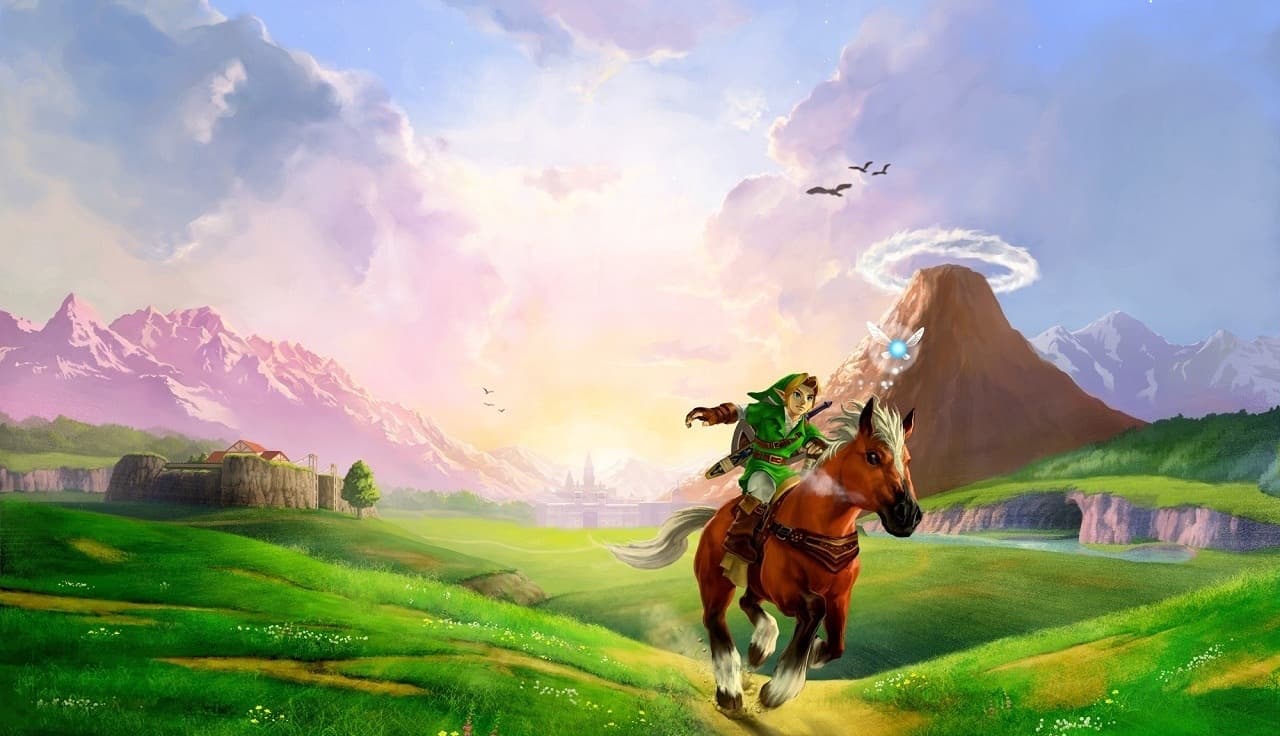
There it is again. That familiar itch in the back of the collective gamer brain. Another round of whispers that Nintendo is finally, finally going to give us a full remake of The Legend of Zelda: Ocarina of Time. Price rumors. Pre-order dates. A Nintendo Direct that's supposedly just around the corner, ready to drop the bomb.
I've seen this movie before. We all have. It comes around like clockwork, usually right before a major Nintendo event or a slow news cycle. And every time, a part of me wants to believe. Not because I need to play Ocarina of Time again — I've played it on the N64, on the GameCube, on the Wii, on the 3DS, and on the Switch. I know every stone in the Temple of Time. I can hear the Water Temple's theme in my sleep. I don't need a remake to revisit Hyrule.
But I want one anyway. Not because the original is unplayable — it's perfectly playable. Not because I think the 3DS remake was bad — it was excellent. I want one because I want to see what a studio that has spent thirty years thinking about this game would do with it now. I want to see the design philosophy layered on top of itself.
Here's the thing nobody says out loud: Ocarina of Time isn't just a game. It's a design document that the entire industry has been citing for twenty-five years. Every third-person action game with a lock-on system owes it a debt. Every game that asks you to learn a song and play it back to solve a puzzle owes it a nod. Every time you walk into a room in a modern game and the camera smoothly centers behind your character — that's Ocarina of Time's ghost in the machine.
And yet, the game itself is a product of its time. The pacing is deliberate in a way that modern players might call slow. The combat is simple. The story, while foundational, is told in broad strokes. A remake wouldn't just be a graphical upgrade — it would be a conversation between the 1998 team and the 2025 team. What do you keep? What do you change? Do you keep the iron boots as an item you have to equip in the menu, or do you modernize it? Do you keep the owl that asks you the same question every time you talk to it, or do you respect the player's time?
I don't know the answers. But I want to see the team argue about them.
This is where the unexpected connection comes in. Think about Demon's Souls. I beat that game three times and never really enjoyed it. But I respect it the way I respect a difficult teacher. It taught me things about patience, about learning patterns, about failure as a mechanic rather than a punishment. Ocarina of Time taught me different things — about exploration, about the satisfaction of a puzzle solved through observation rather than brute force. Both games are foundational. Both games are worth revisiting. But they ask different things of the player.
A Demon's Souls remake happened. It was beautiful. It was faithful. It also sanded off some of the rough edges that made the original feel like a haunted artifact. That's the risk. You can remake a game, but you can't remake the context in which it was played. The kid who first stepped into Hyrule Field in 1998 doesn't exist anymore. That feeling — the sense of scale, of possibility, of a world that felt bigger than any game had a right to be — that's not in the code. That's in the player.
So what do I actually want? I want Nintendo to be honest with themselves about what Ocarina of Time is now. Not a sacred text. Not a museum piece. A game. A good one. One that deserves to be played by people who weren't born when it came out. If they can do that — if they can make something that stands next to the original rather than replacing it — then I'm in. If they're just going to polish the textures and call it a day, I'll pass.
But I'll still be watching that Direct. Just in case.
"The Ocarina of Time remake rumors are a ritual now, but the question isn't whether Nintendo will do it — it's whether they can do it without losing what made the original worth remaking in the first place."
— TED